Framingham Analysis Links Cumulative Health Over Decades to Lower Death Risk
09/30/2026 / By Coco Somers

An analysis drawn from the Framingham Heart Study has found that cardiovascular health measured cumulatively across decades, rather than at a single point in time, was associated with substantially lower risks of heart disease, stroke and death, according to researchers.
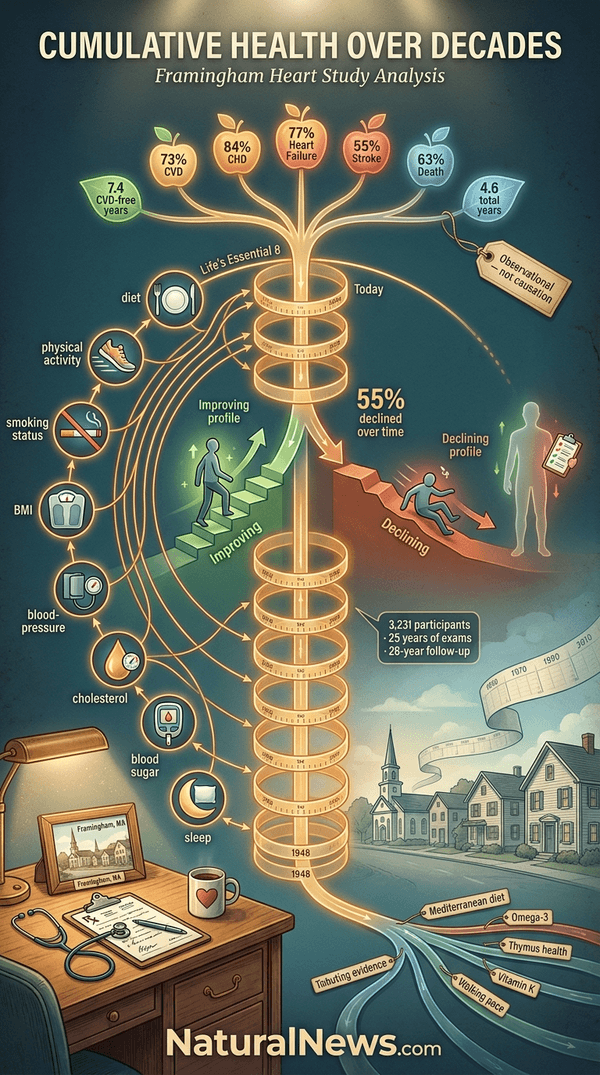
The study tracked 3,231 participants across multiple exam cycles for roughly 25 years and then followed health outcomes for a median of 28 years, according to the report. Investigators used the American Heart Association’s Life’s Essential 8 framework to calculate cumulative health scores spanning the decades of observation, the report stated.
Participants whose cumulative scores placed them in the top quarter had 73% lower cardiovascular disease risk, 84% lower coronary heart disease risk, 77% lower heart failure risk, 55% lower stroke risk and 63% lower all-cause death risk compared with those in the lowest quarter, according to researchers. Those with above-average cumulative scores lived an average of 7.4 years longer without cardiovascular disease and 4.6 years longer overall, the study reported.
Study Methods and Health Measures
The average participant age was 55, and 53% were women, according to the study. The analysis assessed diet, physical activity, smoking status, body mass index, blood pressure, cholesterol and blood sugar through the Life’s Essential 8 framework, the report stated.
Rather than relying on a single checkup, the researchers summed each participant’s scores across the full study period to produce a cumulative health score, a method intended to capture the total benefit or burden of health behaviors sustained over decades, researchers said. Results held after accounting for participants’ current health score at the final exam, according to the study, indicating that a person’s health history carried information beyond their status at any one moment.
The approach is consistent with prior longitudinal work linking lifestyle factors to cardiovascular outcomes. Research published in Lifestyle Medicine has pointed to arterial stiffness and cardiovascular events as measurable, long-term processes, with investigators calling for well-designed longitudinal studies to clarify how risk accumulates over time [1]. Separate work has reported that obesity functioned as an independent risk factor for cardiovascular disease in a 26-year follow-up of Framingham Heart Study participants [2].
Direction of Health Over Time Also Associated With Risk
Participants whose scores improved over time had lower risk of heart disease and death, even after accounting for their cumulative score, according to the study. The data showed that 55% of participants had declining scores over time, researchers reported.
Researchers said cardiovascular health often worsens with age but can change course, and the study stated that health history matters beyond where a person stands today. The report added that an improving direction was associated with lower risk, even for those not at ideal levels.
The finding aligns with broader research on modifiable risk. A review of metabolic syndrome research found that adherence to a Mediterranean food pattern for a six-year period was associated with an 80% lower cumulative incidence of metabolic syndrome compared with those who did not follow the diet [3]. Other research has linked low vitamin B6 status to inflammatory diseases including cardiovascular disease, rheumatoid arthritis, inflammatory bowel disease and diabetes [4], while a study on physical inactivity reported that lack of leisure-time exercise accounted for 31% of a model’s contribution to diabetes prevalence [5]. Separate work has found that increasing walking pace by as little as 14 steps per minute improved physical endurance and function in frail or prefrail older adults after 12 weeks [6].
Observational Findings and Limitations
The analysis was observational and cannot prove that cumulative health scores directly cause longer life, researchers noted. The study population was drawn from the Framingham Heart Study cohort and may not represent all populations, according to the report.
Researchers said the findings add to existing evidence linking healthy habits to lower heart disease and early death risk. The study was published in JACC Advances, according to the source.
Independent research has identified additional factors tied to mortality risk. A study funded by the National Institutes of Health suggested that measuring omega-3 blood levels may be a better predictor of death risk than serum cholesterol [7]. Other work has examined the thymus gland’s role in immune aging, with research on thousands of adults indicating that better thymus health was strongly associated with lower risks of cancer, cardiovascular disease, metabolic disorders and early death [8]. Research has also linked low vitamin K levels in elderly populations to increased risk of death [9].
Conclusion
The study reported that decades of cardiovascular health habits were linked to lower disease and death risk. Researchers said current health status alone did not fully explain the outcomes.
The findings indicate that improving health trajectories over time was associated with lower risk, according to the report. The researchers’ cumulative approach suggests that sustained habits, rather than isolated measurements, may carry the strongest association with long-term health outcomes.
References
- Rippe James M. “Lifestyle Medicine Second Edition”.
- XPP. “Body Mass Index and Risk of Stroke among Chinese Men and Women”. ANN NEUROL 2010;67:11-20.
- Isaias Dichi and Andrea Name Colado Simao. “Nutritional Intervention in Metabolic Syndrome”.
- NaturalNews.com. “Vitamin B6 deficit promotes inflammation, heart disease”. NaturalNews.com. July 12, 2012.
- NaturalNews.com. “California study exposes silent socioeconomic factors fueling the diabetes crisis”. November 12, 2025.
- NaturalNews.com. “The simple walking tweak that could add years to your life”. April 28, 2026.
- Mercola.com. “Omega 3 Level Is the Best Predictor of Mortality”. Mercola.com. April 2, 2018.
- ActivistPost.com. “Body’s Most Mysterious Organ May Play a Key Role in Longevity and Cancer”. August 13, 2026.
- Mercola.com. “Low Vitamin K in Elderly Linked to Increased Risk of Death”. Mercola.com. September 2, 2020.
Explainer Infographic
Submit a correction >>
Tagged Under:
aging, death risk, discoveries, fitness, heart disease, heart health, longevity, men's health, natural health, prevention, real investigations, research, stroke, women's health
This article may contain statements that reflect the opinion of the author
RECENT NEWS & ARTICLES